Treasury management
How a payment calendar helps identify cash shortfalls early and how payment requests are reviewed and executed.


In this article
A company can end the month with a profit and still run short of cash on the day a supplier payment is due. Timing can explain the gap. A customer may pay after payroll or a supplier invoice falls due. The month-end result does not show what happens during the month.
Treasury management organises receipts, obligations and payments by date. It helps management assess cash availability and decide what to do before a payment falls due.
What treasury management does
Treasury work starts with available cash. The team needs account balances, restrictions on their use and the currencies of obligations. Expected receipts are tracked separately from cash already available.
The team then lists upcoming payments with their amounts, due dates, supporting records and owners. A contractual obligation is more certain than a preliminary request from a department. The plan should distinguish them.
The team matches receipts with payments, reviews requests and prepares a forecast. When conditions change, the plan is updated. Management can then decide when to purchase, which payments can take priority and whether financing is needed.
The payment calendar
The payment calendar shows the projected cash balance for selected dates. For each period, expected receipts are added to the opening balance and payments are deducted. The result is the next period’s opening balance.
The time horizon depends on the purpose. Near-term dates need more detail, while later weeks show overall cash needs. Asar Consulting uses a 13-week calendar in its financial support service.
A forecast needs an as-of date. If a customer changes a promised payment date, the earlier receipt date can no longer be treated as confirmed. It helps to record the information source and who will verify it.
A positive week-end balance can conceal a shortfall on an individual day. Cash may run short between receipts even if the gap closes by Friday. A daily breakdown makes this visible.
An illustrative example of a delayed receipt
A company starts the week with 180 million Uzbek soums. It must pay 120 million on Monday, 160 million on Wednesday and 280 million on Friday. It expects receipts of 160 million on Tuesday and 260 million on Thursday.
With the original dates, the projected balance stays positive. It is 60 million on Monday, 220 million on Tuesday, 60 million on Wednesday, 320 million on Thursday and 40 million soums on Friday.
The customer says it will pay Tuesday’s 160 million on Friday instead. Weekly receipts stay the same, but Wednesday’s projected balance falls to −100 million, calculated as 180 − 120 − 160. Friday’s balance is still 40 million.

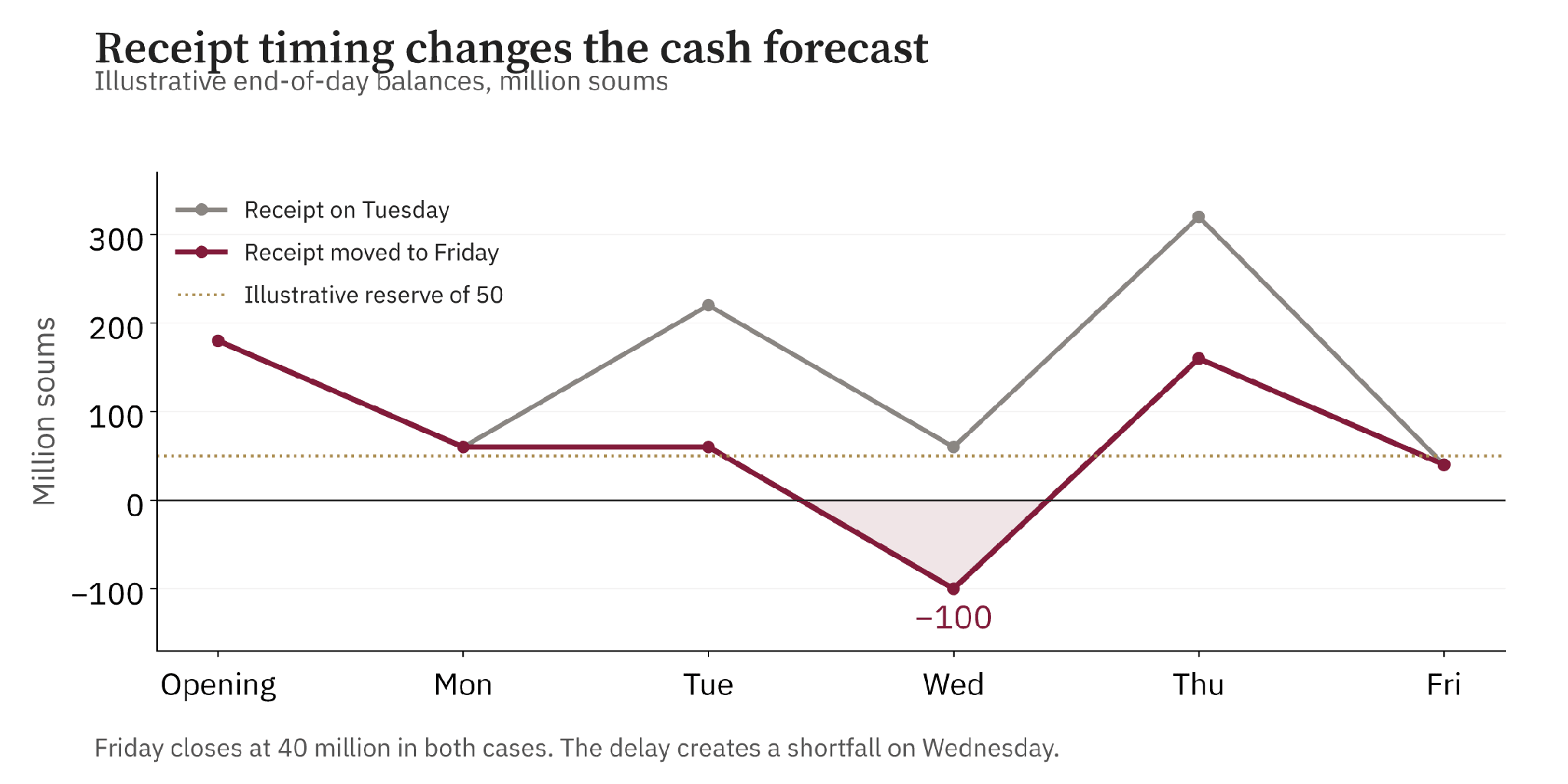
Chart 1. In this example, moving a receipt of 160 million soums from Tuesday to Friday puts Wednesday’s projected balance at −100 million.
Illustrative calendar after the delayed receipt, million soums
| Day | Receipts | Payments | Projected balance |
|---|---|---|---|
| Mon | 0 | 120 | 60 |
| Tue | 0 | 0 | 60 |
| Wed | 0 | 160 | −100 |
| Thu | 260 | 0 | 160 |
| Fri | 160 | 280 | 40 |
The negative figure represents a projected shortfall. It shows that the company cannot make all scheduled payments on those dates using the funds in the plan.
Closing the gap to zero requires another 100 million by Wednesday or agreed changes to payment dates. If the company sets a minimum reserve of 50 million, the amount needed to maintain it rises to 150 million. The reserve is illustrative and is specific to this example.
What action to consider
The first step is to verify the new receipt date. Payment sometimes depends on signing a document or accepting a delivery. Addressing the cause of the delay may be as important as waiting for the payment.
Management then reviews feasible options. These may include asking the customer for a partial payment, agreeing a new date with a supplier, changing an unconfirmed purchase or considering available financing. Each option depends on the company’s actual circumstances and obligations.
Changing a payment date requires agreement from the relevant party. The contractual deadline still applies until a change is agreed. The decision and confirmed date are recorded in the plan.
If the company uses additional financing, the forecast should show the proceeds, cost and repayment. Covering a current shortfall can otherwise create pressure in later weeks. Each financing source requires a separate assessment of its terms.
How a payment request is handled
A request explains who needs to be paid, what the payment is for and when it is due. The finance team checks the contract or other supporting evidence, the budget and available cash. It also verifies payment details, amount, due date and duplicate-payment risk.
After review, the request goes to a person authorised to approve it. Any concern should be clear before payment, whether it involves missing evidence, unbudgeted expenditure or a potential cash shortfall. Management needs the reason and a possible next step.
The accounting team or a designated client employee makes the payment. Asar Consulting can arrange bookkeeping and tax accounting through its outsourced accounting partner with any of the three packages if needed. After payment, the confirmation is linked to the request, and the actual amount is recorded in the accounts and calendar.

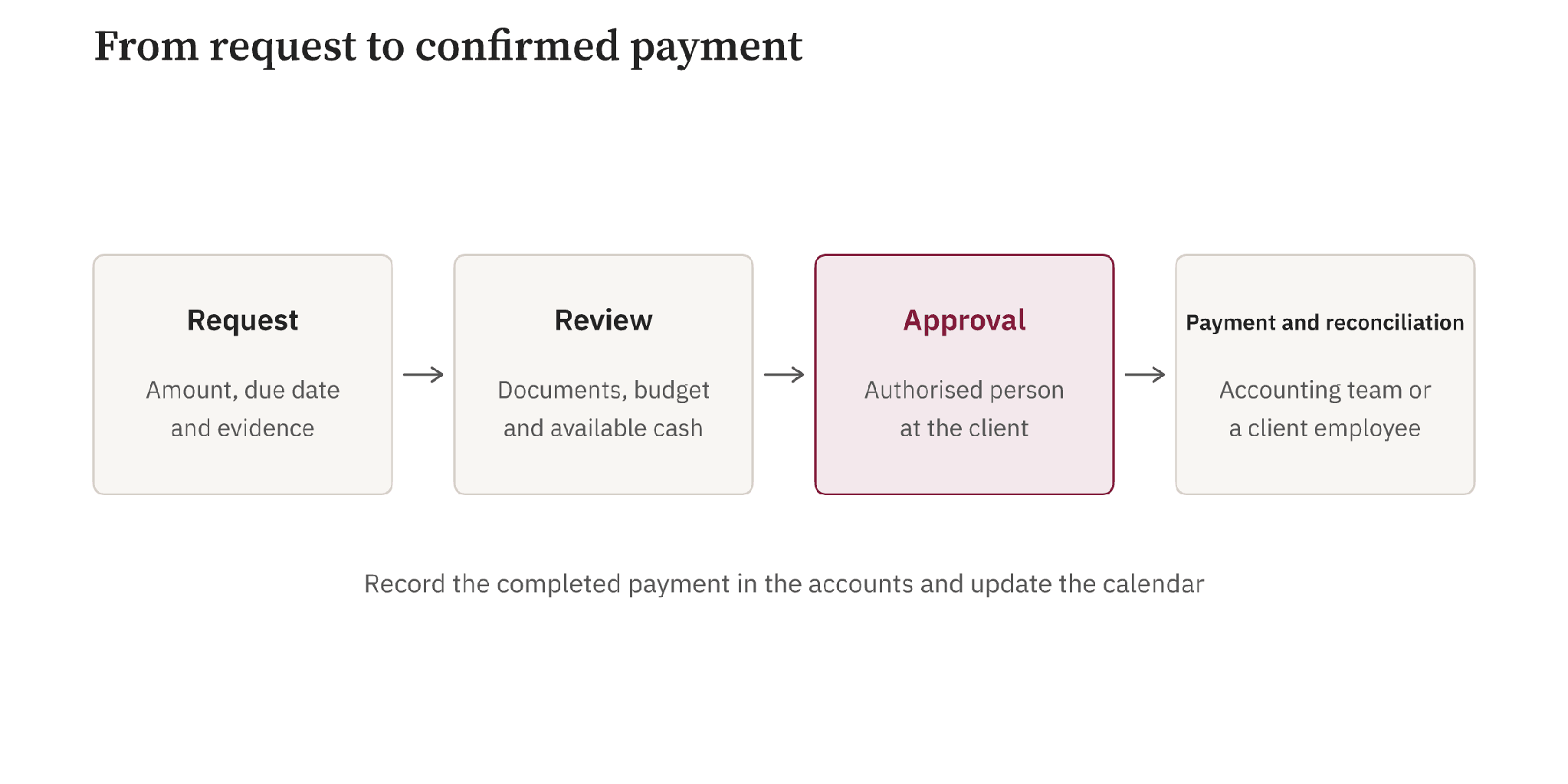
Diagram 1. Payment review, approval and execution are separate steps.
Outstanding balances and forecast reliability
The contractual due date and expected receipt date should be tracked separately. Moving an overdue receipt to the next day requires new evidence. This would make the forecast show receipts the company cannot rely on.
Future obligations also matter. A signed order may require an advance now and a final payment after delivery. The forecast is incomplete if it includes only the first payment.
Forecast reliability can be assessed by comparing expected and actual dates and amounts. Frequent rescheduling points to sources that need closer checking. An accuracy measure should still reflect the uncertainty of longer horizons.
How the calendar connects with budgeting and accounting
The budget shows planned expenses and the result for the period. The calendar shows when cash moves. Inventory can require payment before the goods become an expense in the profit and loss statement. Each view serves different decisions.
Actual payments should enter the accounts under agreed rules. A supplier advance, a purchase of equipment and a loan repayment have different accounting treatment. A bank transaction alone does not determine the income or expense category.
Together, the accounts, budget and calendar show why a payment is needed, whether it was planned, what supports it and how it affects available cash. This gives the owner a clearer basis for approval.
Keeping the calendar current
Calendar updates should distinguish earlier expectations from new information. A revised receipt date, for example, should show when it changed and who checked it. At the next review, the team can explain the change and identify what still needs confirmation.
Planned payments are replaced with actuals and reconciled with payment confirmations. Leaving a completed request among future payments would deduct the same amount twice. Similarly, a receipt is removed from the forecast once it is included in available cash.
The next few days should be checked in more detail than later weeks. A later receipt may still be based on a sales plan, while tomorrow’s payment already has a contractual basis. Showing the degree of certainty helps management see which dates are reliable and which require confirmation before taking on commitments.