What financial support includes
What ongoing financial support covers and how the company and its external team share responsibility.


In this article
A company makes new sales, receives deliveries and incurs expenses. Customers postpone payments, employees submit documents, and management needs to know how much the business earned and whether it can cover upcoming payments. These questions recur even after the accounting system is in place.
Ongoing support helps organise this work. It provides current reports, financial plans and clear procedures. Owners can discuss decisions using verified data and see who is responsible for the next steps.
How the work runs
Financial support covers data collection, accounting, verification, reporting and discussion of findings. The team also tracks agreed payment tasks, documents and deadlines. The scope depends on the package and the arrangements agreed with the company.
The work follows a recurring cycle. Employees submit information, specialists check and process it, and management receives the results. The review produces decisions and new tasks. Their execution affects the following period’s figures.
Companies with their own accounting teams may still need financial support. Bookkeeping and tax accounting can also be added if needed. Asar Consulting arranges this work through an outsourced accounting partner. Accounting records are one input. The finance team also needs information about plans, outstanding balances, business lines and upcoming obligations. This connects statutory accounting with management decisions.

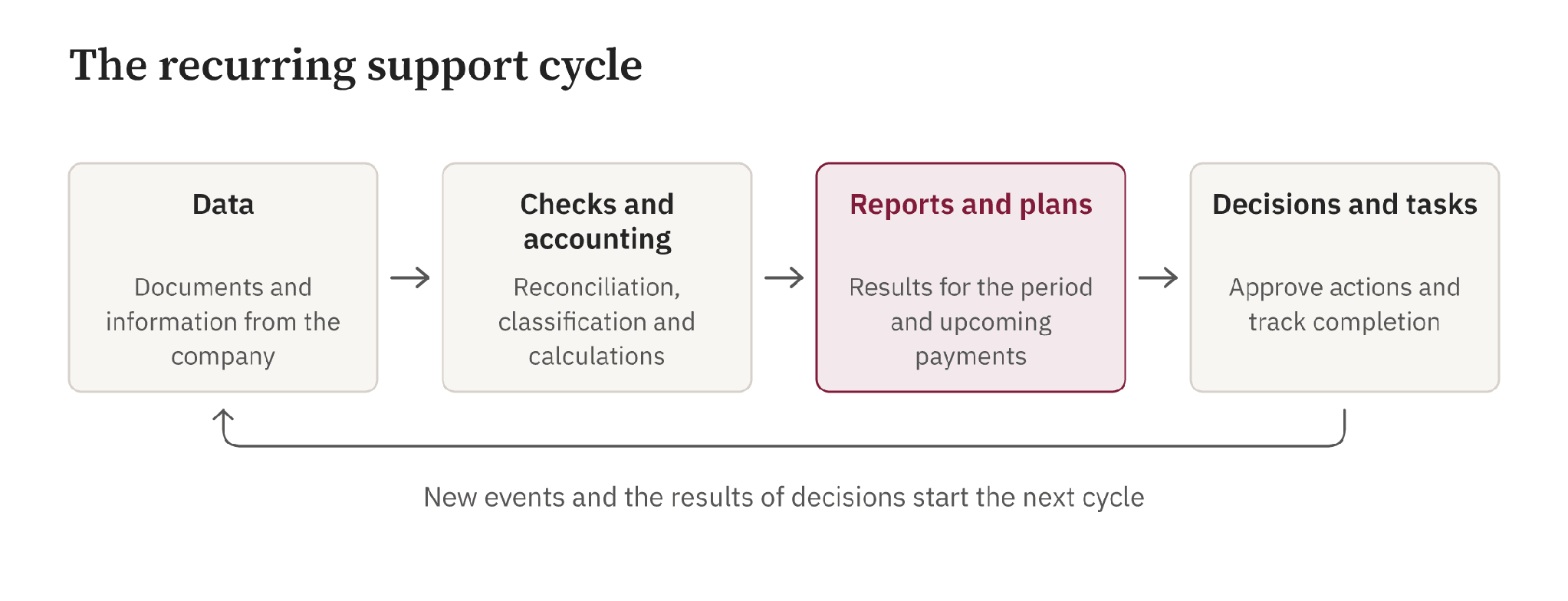
Diagram 1. Ongoing support links data, financial checks, results and next steps.
When ongoing support is useful
Common reasons to bring in an external team include late reports, payment plans that quickly become outdated and owners having to collect information themselves. A regular work cycle can reduce the coordination burden and make information available sooner.
If the internal team already performs the required functions on time, it can continue independently. A consulting project may be enough for a specific change. The choice depends on whether the company needs ongoing work or a solution to a defined problem.
Ongoing support connects financial figures with action. Management sees the current position, understands why it changed and can assign next steps. Agreed procedures, a regular schedule and clear ownership help put decisions into practice.
Management accounting and reporting
Management accounting shows which income and expense items make up the business result. The parties agree on categories, business lines, recognition dates and rules for allocating shared expenses. Consistent rules make it possible to compare periods and explain changes.
The core reports are the profit and loss statement, cash flow statement and management balance sheet. The first shows the financial result, the second explains receipts and payments, and the third relates the company’s assets to its liabilities and equity. Each answers a different question.
Asar Consulting provides ongoing accounting and monthly reporting with analysis within the agreed scope. The work is useful when it explains changes and informs decisions. For example, an increase in delivery costs calls for checking order volume, rates and the number of urgent shipments.
Management also needs to know the limits of the data. An unverified expense or missing cost information cannot be treated as a reliable figure. Each open issue is recorded with the person responsible for clarifying it.
Cash and upcoming payments
Treasury work links cash balances, expected receipts and obligations by date. Its main tool is the payment calendar, which shows the projected balance after scheduled payments. It helps identify periods when cash may run short.
The calendar needs updating when conditions change. A customer’s promised payment date can differ from the contractual due date. A purchase may require payment before cash from the related sale arrives. The forecast needs to reflect these differences.
Preparing a payment and authorising expenditure are separate steps. The finance team checks the request and its effect on the cash plan. An authorised person at the company approves it, and the accounting team or a designated employee makes the payment. These responsibilities are assigned in advance.
Budgeting and variance analysis
A budget brings together plans for sales, purchasing, staffing and other expenses for a defined period. It shows the resources needed and the assumptions behind the expected result. Once the period starts, actual figures are compared with the plan.
A variance alone does not explain its cause. Expenses can rise because of higher activity, a price change or a departure from an agreed procedure. The finance team helps separate these factors and identify questions for management.
Coordinating tasks and documents
Financial outcomes depend on several people meeting their deadlines. Sales confirms deal terms, purchasing provides delivery information, and accounting prepares financial records. Delayed inputs can hold up a report or payment request.
Ongoing support helps organise this exchange. Recurring activities have a defined information source, owner, deadline and expected result. Each open issue has a next step. The report informs the review, and each management decision becomes a task with an owner.
At Asar Consulting, a project manager coordinates work with the client. Finance specialists prepare calculations and explanations, and a reviewer checks the quality of the output. This division of roles helps organise work across several departments.
The finance team works within the agreed scope. Decisions on commercial terms, budget approval and delegation of authority remain with company management.
How support begins
Asar Consulting’s standard implementation covers the first three calendar months and is included in the service fee. The team reviews data sources and opening balances, agrees accounting rules, and sets up templates and procedures. After a trial cycle, it corrects errors and prepares the first analytical report.
The first analytical report is scheduled for month three. An implementation report confirms completion. Specific dates and dependencies are agreed with the company. This gives ongoing work a tested foundation.
At the start, the parties identify available historical records, data owners and open issues. If records need reconstructing, the scope is agreed separately. Responsibility for urgent work during implementation also needs to be defined.

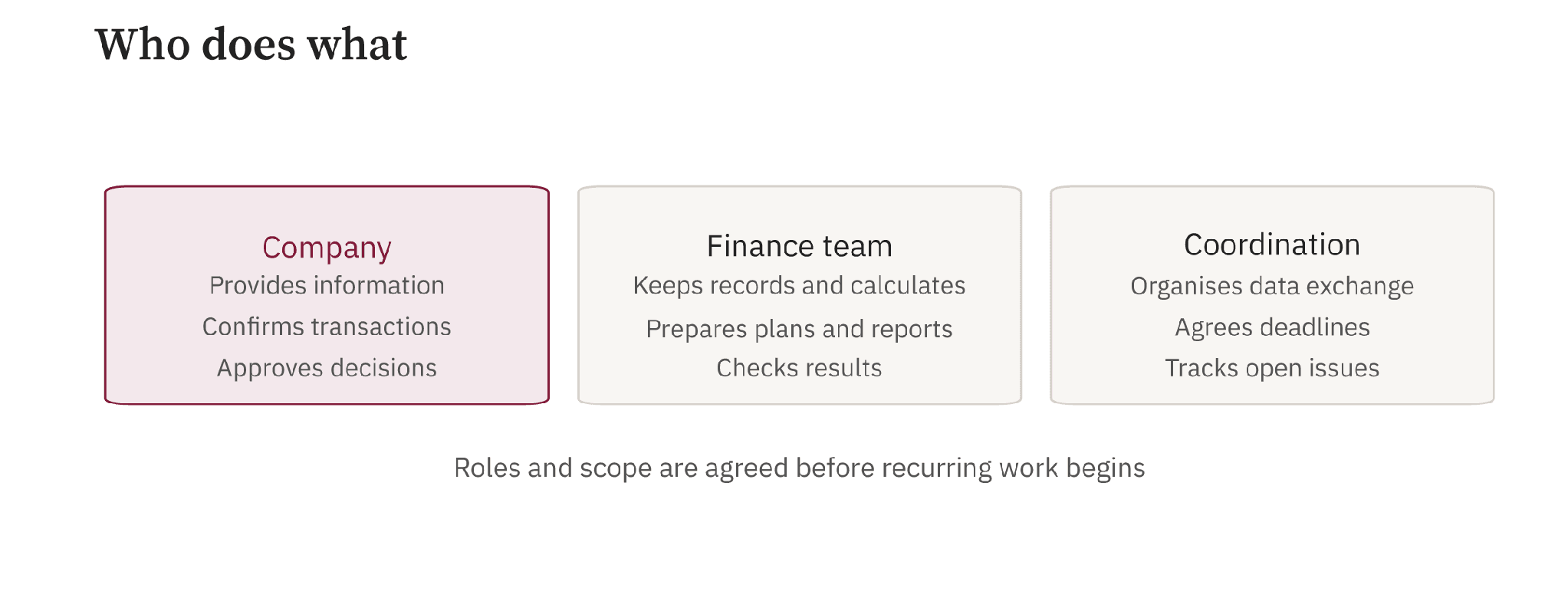
Diagram 2. The roles of the company, finance specialists and coordination within the agreed scope.
What the company remains responsible for
The client provides reliable source information and appoints staff to work with the team. Management approves budgets, payments and changes to procedures. The finance team cannot independently verify a delivery without records or set commercial terms on behalf of the authorised manager.
Bookkeeping and tax accounting are available through a partner with any of the three support packages. Scope, cost and task allocation are agreed separately. Maintaining inventory records and preparing underlying product cost data also require a separate arrangement. The company can provide these data or commission the work separately.
How to assess the results of support
Quality can be assessed against agreed results such as timely reports, complete data, an up-to-date payment plan and follow-through on decisions. Each measure needs a clear deadline and defined conditions for the team to receive the necessary information.
Profit growth alone does not establish the quality of support. Sales, prices, product mix and other business decisions all affect profit. The finance team helps analyse these factors. For the owner, a useful measure is which specific actions the information made possible.