Two service models
How consulting differs from ongoing support, how to choose a service model, and how to connect project changes with day-to-day work.

In this article
Consulting and ongoing support
An owner is preparing to launch a new business line and wants to understand whether the investment will pay back. At the same time, the existing business needs an up-to-date payment plan, reporting and cost monitoring. Both tasks concern finance, but they require different ways of organising the work.
Consulting suits the first task: investigating the question, testing options and preparing a solution. The second requires ongoing support: regularly carrying out agreed tasks and maintaining the business's financial systems. These models can be used separately or together. The choice depends on the result the company needs and who will maintain it afterwards.
What each service model means
A service model here means the way work with a company is organised, including its scope, rhythm and expected result. Asar Consulting distinguishes two such models. Consulting covers project-based tasks, while ongoing support covers recurring financial and management work.
The same tool may be needed in both models. For example, a financial model can be developed to support a decision on opening a branch and then updated as sales and costs change. Choosing a service solely by the name of a tool is therefore unhelpful. It is more useful to determine whether a solution needs to be developed, its regular use needs to be organised, or both are required.
Consulting addresses a defined task
A consulting project starts with a question that requires a well-supported answer for management. Is a new product worth launching? How should the purchasing process change? What data should a future automation system collect? To answer these questions, specialists study the starting position, check calculations and compare possible actions.
The work may include a financial model, scenario analysis, process descriptions, selection of automation tools and implementation support. The agreed project result matters. If the company needs a working tool, a presentation of recommendations alone is not enough. The scope should include setup, testing with company data and employee training from the outset.
Illustrative example of a new business line
A company is assessing a new business line. Monthly revenue is assumed to be UZS 4 billion, variable costs 60% of revenue and fixed operating costs UZS 1.2 billion a month.
In this scenario, variable costs amount to UZS 2.4 billion. Deducting them leaves UZS 1.6 billion. After a further UZS 1.2 billion of fixed costs is deducted, estimated operating profit is UZS 400 million a month.
At revenue of UZS 3 billion, exactly UZS 1.2 billion remains to cover fixed costs. Estimated operating profit is zero. This is a simplified illustrative example. Investment, taxes, interest and loan principal repayments are considered separately. These figures will also be needed to assess payback.
The model helps management see how sensitive the result is to sales and costs. It allows the manager to test whether the plan is realistic, which terms need to be agreed and under which scenario the launch would require additional cash.
Ongoing support maintains recurring work
Once a business is operating, financial tasks recur. New sales, supplier obligations, expenses and budget variances arise. Data needs to be collected and checked on time, then turned into information for decisions.
Ongoing support may include management accounting, reporting, payment planning, budgeting, forecasting and coordination of financial tasks. Its scope depends on the agreement. At Asar Consulting, these functions form part of the core “Finance Department” package and other agreed service arrangements.
The working rhythm is set around the company's needs. For example, the payment calendar is updated as receipts and obligations change, while monthly results are discussed after the period is closed. The meeting should examine the causes of variances, identify actions and assign responsibility.
Illustrative example of payments
For the coming week, a company expects UZS 1.5 billion in receipts and plans UZS 2.1 billion in payments. With no available opening cash balance, the gap is UZS 600 million. A payment calendar helps identify this funding need in advance and check the timing of receipts and payments.
A single calculation will soon become outdated if a customer postpones payment or a new mandatory payment arises. Ongoing support keeps the forecast current. Management receives an updated picture and can agree on actions in time.
Differences between the models
| Criterion | Consulting | Ongoing support |
|---|---|---|
| Main task | Resolve a specific question and implement an agreed change | Regularly carry out agreed financial tasks |
| Organisation of work | A project with stages and completion criteria | A recurring cycle of tasks and reporting |
| Result | A calculation, model, process or implemented tool | Current data, reports and organised work |
| What to agree | Deliverables, stages, acceptance and handover | Tasks, frequency, deadlines and working arrangements |
How consulting and ongoing support work together
A company may begin with a project to establish management accounting. The project defines the reports, cost allocation rules, data sources and month-end closing procedures. The system is then tested and employees are trained.
The company then decides who will maintain the accounts. If the internal team is ready, the tools and rules are handed over to it. If an external team is needed for recurring work, ongoing support is introduced. Implementation may also be part of the agreed service scope. A separate project is not always required before ongoing support begins.
The reverse is also possible. Recurring work may reveal a task outside the usual scope, such as opening a branch, reviewing an incentive system or implementing new software. This becomes a separate project with its own result and deadline, while day-to-day financial work continues.
The advantage of combining the models lies in continuity. Project decisions draw on current data, while new rules have people responsible for applying them and are checked regularly. The company maintains a connection between what was planned and what happens after implementation.

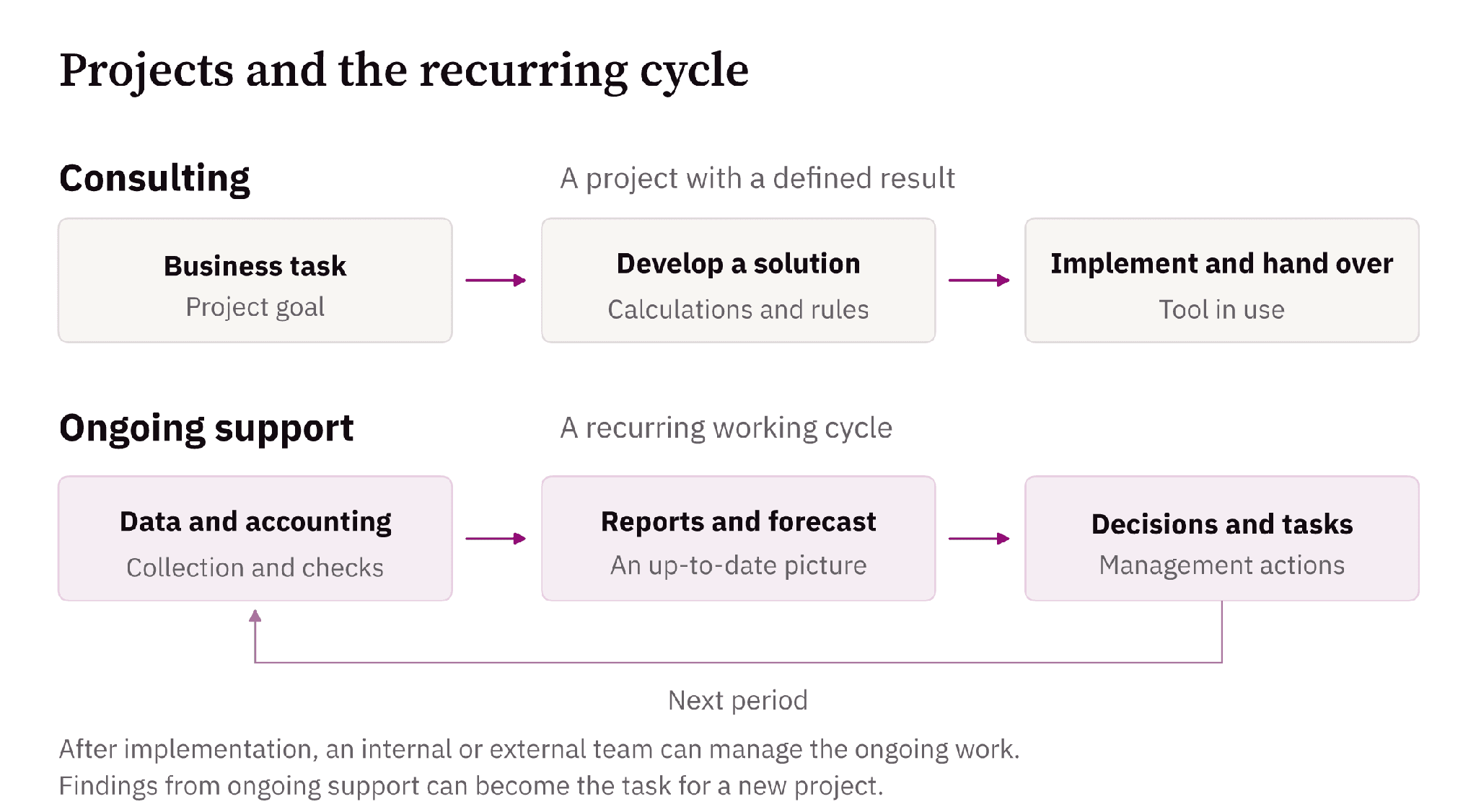
Diagram 1. Project work and the recurring cycle of ongoing support.
When one model is enough
If a company has a strong finance team but needs to assess an investment project or change a particular process, consulting alone may be sufficient. Employees continue the work independently after the project ends.
If an accounting system is already established and management needs regular reporting and organised payments, ongoing support may address the main task. Major process redesign should not be included automatically. The need for it must first be established.
External services may be unnecessary if the internal team already performs the required functions, meets deadlines and provides management with clear data. A specific gap justifies bringing in specialists, such as a shortage of time, expertise, team capacity or independent analysis.

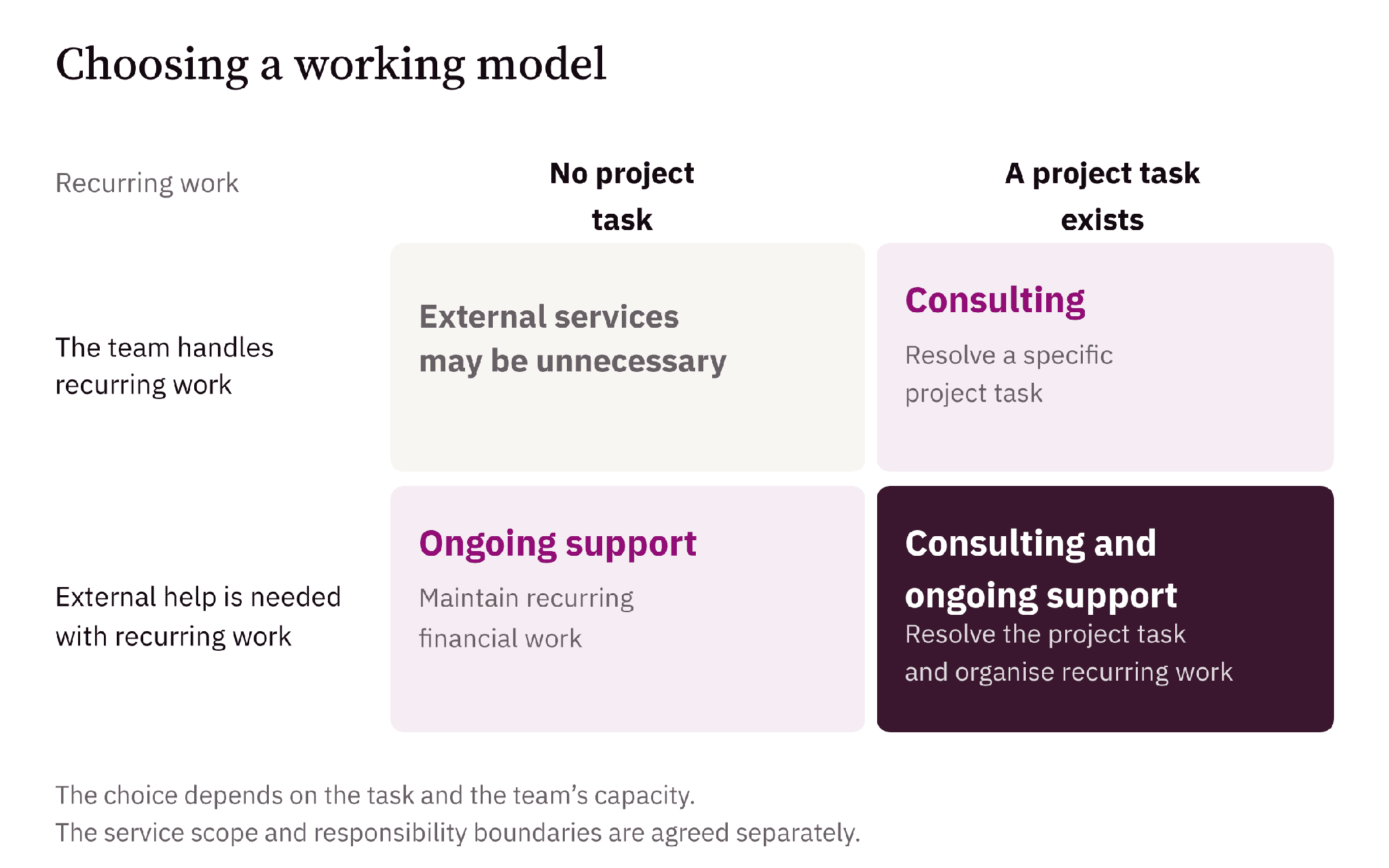
Diagram 2. Choosing a model based on the task and the team's capacity.
What needs to be agreed before work begins
The task is first defined through the required result. “Take care of finance” leaves too much uncertainty. “Receive a profit report by business line after each month is closed” provides a basis for discussing data, deadlines and verification.
For a project, the parties agree on the deliverables, stages, deadlines and acceptance criteria. It is necessary to clarify whether implementation is included and what employees will receive for independent use, such as a methodology, model, instructions or configured tool.
For ongoing support, the recurring tasks, reports and meetings are defined. Responsibility for providing data and checking results must be assigned. The procedure for considering new tasks outside the agreed scope also needs to be agreed separately.
Responsibility boundaries matter in both models. Specialists prepare calculations, organise processes and help assess options within the agreement. Management approves decisions and payments, while company employees provide data and perform agreed actions. These roles need to be established before work begins.
How to compare proposals
Projects and ongoing services deliver results on different bases. A project fee covers the agreed scope through completion. Ongoing support fees cover specified functions over a period. A one-off project fee and a monthly support fee therefore cannot be compared without a list of the tasks covered.
It is necessary to check what the proposal includes. For a project, this may cover collecting initial data, development, testing, implementation and training. For ongoing support, relevant factors include the number of companies and business lines, data sources, reporting requirements and the complexity of working with employees. The parties determine the specific terms.
It is useful to discuss handover at the end of the engagement separately. The company must retain the agreed outputs, including current reports, models in use, documented rules and necessary access rights. An agreed handover procedure makes a change of provider or a move to an internal team clearer. For the owner, this means keeping financial work under control as the team changes.
How to assess the result for the company
Consulting results are assessed by whether the task has been resolved and whether the resulting materials or tool can be used. For ongoing support, the stability of the process, adherence to deadlines, data quality and timely identification of issues requiring decisions are important.
The two service models give management different, connected advantages. Consulting helps develop and implement a well-founded solution. Ongoing support ensures its regular use and provides feedback on results. When consulting and ongoing support are coordinated, the owner gains a basis for decisions and an organised process that helps put them into practice.