Budgeting
How to connect departmental plans in a budget, compare it with actual results and explain what drove the variances.


In this article
A company plans to grow sales, hire staff and launch a new business line. Each plan can look reasonable on its own, but together they may require more money and resources than the business has. Budgeting brings these decisions into one financial picture.
A budget links expected income, expenses, investment and cash movements for a defined period. Once work begins, it provides a basis for comparison with actuals. Management can see where conditions changed and which actions need review.
What a budget is
A budget is an agreed plan. It should make the assumptions clear, including sales volumes, prices, staffing needs, purchasing dates and other material conditions. When assumptions are hidden, the totals are hard to verify and explain.
The plan works best when it reflects business activity. For example, delivery costs depend on the number of orders and the cost of logistics. Staffing costs depend on team composition and pay terms. These links help update the figures when the volume of work changes.
Management approval gives the budget a formal basis, but forecast reliability still depends on current information. A budget shows chosen targets and the resources needed to reach them. A forecast estimates the outcome under the latest conditions.
Connecting departmental plans
Sales sets expected volumes and customer terms. Purchasing estimates inventory needs and delivery dates. Department heads plan staffing and other resources. The finance team combines this information and checks that the plans are consistent.
Plans can conflict from the outset. Sales may expect a quick launch while purchasing schedules a later delivery. A new product may need extra staff whose costs were left out. A budget review helps identify these gaps before the period starts.
After the review, management sets priorities and approves the plan. It should be clear which costs depend on activity, which remain relatively fixed and which decisions still need confirmation.

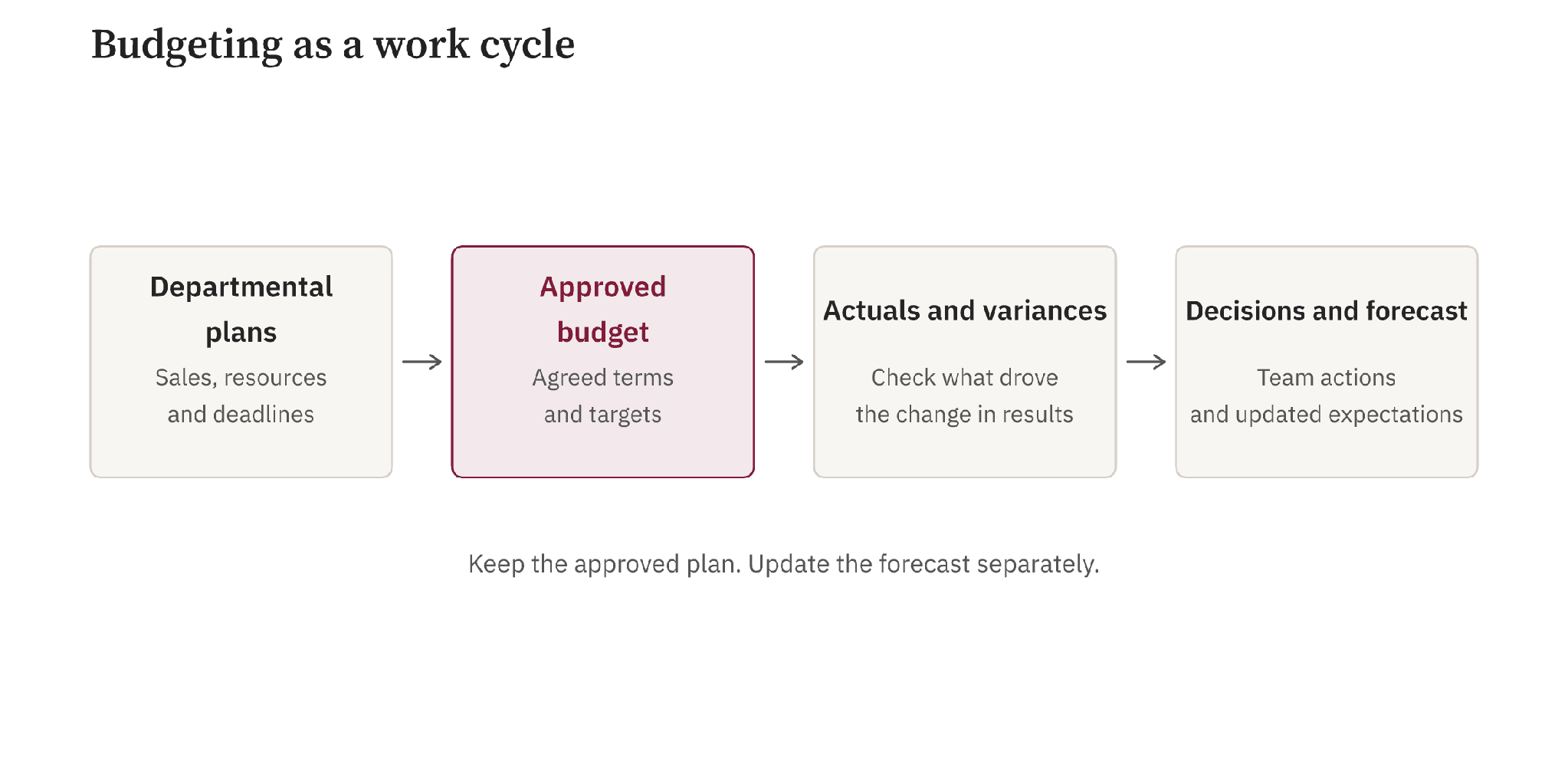
Diagram 1. The plan, actuals and current forecast are connected and serve different purposes.
Profit and cash in the plan
The income and expense budget shows the expected financial result. The cash flow plan shows when receipts and payments occur. The two are related, but differ in timing and content.
For example, a company can pay for goods before selling them. The cash plan shows payment now, while the profit calculation recognises the cost of the goods sold. A customer advance, by contrast, increases available cash before the sale is completed.
Investment also needs separate attention. Buying equipment generates a cash payment. Its effect on expenses depends on the accounting method and useful life. A simplified calculation can show such items separately so that they remain distinct from current expenses.
Reconciling these parts shows whether the company has the resources for the approved plan. A profitable scenario can still need financing at the outset. An expansion decision should therefore be tested for both profitability and cash timing.
Calculating budgeted and actual results
In this illustrative example, a company budgets monthly revenue of 5,000 million Uzbek soums. Variable operating expenses are budgeted at 65% of revenue, or 3,250 million. Budgeted fixed operating expenses are 1,250 million. Budgeted operating profit is 500 million, calculated as 5,000 − 3,250 − 1,250.
Actual revenue is 4,500 million soums. The variable expense ratio rises to 68%, giving expenses of 3,060 million. Fixed expenses reach 1,300 million. Actual operating profit is 140 million, calculated as 4,500 − 3,060 − 1,300.
Revenue is 500 million below budget, or 10%. Total variable expenses also fall, but their share of revenue rises by 3 percentage points. In this case, lower total expenses do not indicate better sales economics.
Illustrative monthly budget and actuals
| Metric | Budget | Actual | Variance |
|---|---|---|---|
| Revenue, million soums | 5,000 | 4,500 | −500 |
| Variable expenses, million soums | 3,250 | 3,060 | −190 |
| Variable expense ratio | 65% | 68% | +3 pp |
| Fixed expenses, million soums | 1,250 | 1,300 | +50 |
| Operating profit, million soums | 500 | 140 | −360 |
The operating profit variance is 360 million soums. Separating the drivers helps management decide what to review. A revenue decrease of 500 million, at the budgeted variable expense ratio of 65%, reduces estimated profit by 175 million, or 500 × 35%.
At actual revenue of 4,500 million, the increase in the variable expense ratio from 65% to 68% reduces profit by another 135 million, or 4,500 × 3%. The fixed expense overrun adds 50 million. The three drivers total 175 + 135 + 50 = 360 million.

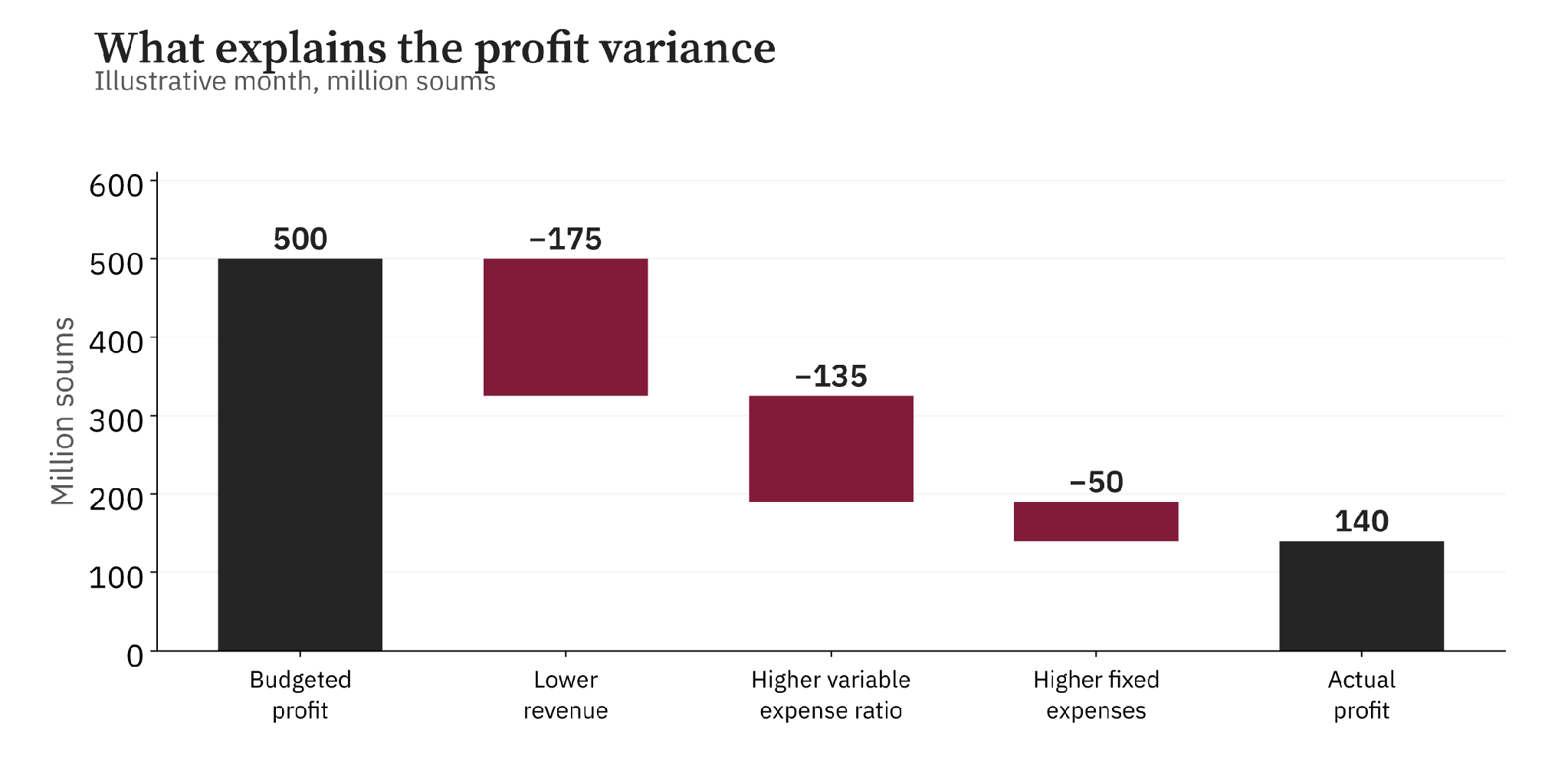
Chart 1. Illustrative breakdown of a 360 million soum decline in operating profit into three drivers.
The breakdown shows where explanations are needed. The revenue decline calls for a review of sales volumes, prices and mix. A higher variable expense ratio may reflect purchasing prices, discounts, product mix or other factors. The variance alone does not establish the cause.
How to review variances
The review starts with factors that materially affect the result. For each one, it establishes what changed and whether the evidence supports the explanation. For example, a claim of seasonality needs a comparison across periods. A rate increase can be checked against the supplier’s terms.
Next, assess whether the business can influence the cause. Management may revise sales terms, purchasing procedures, hiring dates or other actions. External changes that cannot be reversed should be reflected in the forecast and resource plan.
Each decision should have an owner and a review date. The next report should show whether the action was completed and how the figures changed. This gives the budget-to-actual review a role in the next period’s decisions.
Why keep the plan separate from the forecast
Repeatedly rewriting the original budget to match actual results removes the basis for evaluating decisions. Keeping the approved plan and current forecast separate preserves that basis. This makes both the variance from target and the expected outcome visible.
A budget revision can be justified when the company changes the scale of its activity or obtains new financing terms. The reason, date and approved changes should be recorded. The previous basis remains available for historical comparison.
The horizon and update frequency depend on the business. A monthly budget-to-actual review helps assess performance, while a short-term cash forecast supports upcoming payments. Each planning tool serves a distinct purpose.
Roles in budgeting
Department heads own their plans and explain the assumptions. The finance team checks calculations, links and consequences. Management sets priorities, approves the budget and decides on material changes. If Asar Consulting’s outsourced accounting partner handles bookkeeping and tax accounting, the parties agree which records the partner provides for budgeting and when. The service is available by separate agreement with any of the three support packages.
Each measure should have a defined source and period. A sales plan in units cannot be compared directly with cash receipts, and accrued expenses cannot be assessed from bank payments alone. Methods and reports should use comparable data.
When source data are incomplete, some assumptions may be estimates. These estimates should be labelled, agreed and updated when actual information becomes available. An unknown amount needs an explanation if represented by zero.
Choosing the right level of detail
Budget detail should support decisions. An expense managed by a department head should be visible at that person’s level of responsibility. Small, similar amounts can be grouped if this preserves material drivers. Totals that are too broad hinder analysis, while too many lines make updates harder.
For example, delivery expenses can be tracked with order volumes and average shipping cost. That makes it possible to assess a rise in costs alongside activity and decide whether to review rates, dispatch planning or another factor. The right measures depend on the business and available sources.
Budgeting with Asar Consulting
Finance Team and Finance Department include a monthly breakdown of the annual budget for one scenario, monthly budget-to-actual analysis and quarterly reviews. The metrics and procedures are agreed during implementation and in the contract documents.
Regular annual budgeting is outside Financier’s standard scope. A separate project, a new scenario or a material expansion of the analysis calls for an agreed additional scope. This keeps the recurring work and new assignments clearly defined.
A company can manage the budget internally if its team has the data, skills and a regular process. External support can help set up the process and check calculations across departments.
Budgeting turns plans into financial decisions that management can discuss. It clarifies what conditions the result depends on, where variances arose and which actions to change. Linking budget, actuals and forecast helps manage resources consistently and gives management a stable basis for evaluation.