Process management
How to organise recurring financial tasks, find the causes of delays and make process changes part of everyday work.


In this article
A report is late because sales data have not arrived. A payment request is sent back because a document is missing. Management has made a decision, but employees disagree about who should act next. These situations affect both deadlines and the quality of financial work.
Process management organises recurring work by defining the participants, inputs, sequence and criteria for a finished result. At Asar Consulting, ongoing support focuses on agreed financial tasks, documents and the people who work with them.
A process and an individual task
A task is a specific action, such as submitting a monthly bank statement, reviewing a request or preparing a report. A process connects these actions in a repeatable sequence. It shows where information comes from, who checks it and who receives the output.
For example, monthly reporting involves collecting data, clarifying transactions, reconciling records, calculating figures, reviewing the report and discussing it. The delivery date depends on the full sequence. If one participant regularly submits information late, reducing calculation time alone may have little effect.
A clear process makes dependencies visible. Management can identify where a decision, additional resources or a rule change is needed. Staff follow a common procedure instead of agreeing how to work from scratch each time.

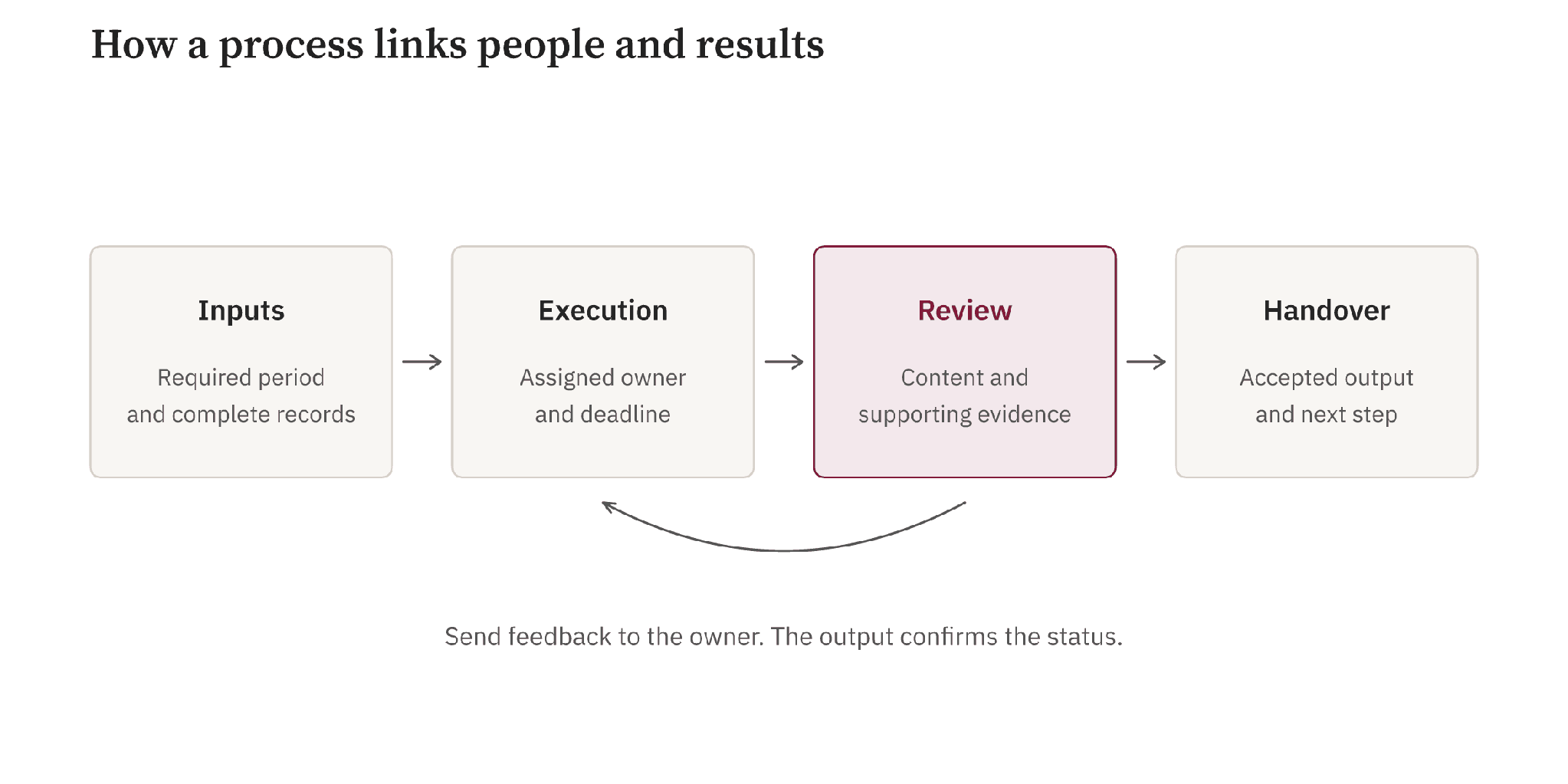
Diagram 1. A reliable handover depends on clear inputs, execution and review.
What to define
Every process needs an objective linked to the company’s work. For a payment request, the objective might be to prepare a verified payment by the required date. A report needs checked data that management can use to discuss performance.
Next, define the inputs. A request without an amount, due date and supporting evidence cannot be reviewed properly. A profit report cannot be final while significant expense information is missing.
Each stage needs an owner and a deadline. Decision authority and responsibility for reviewing the result are assigned separately. In a small company one person may hold several roles, but the actions still need to be distinguished.
Deadlines need to reflect dependencies. If review starts only after a complete set of documents arrives, that condition should be clear in advance. Otherwise, different participants will start the clock at different points and assess delays differently.
Why a task status is insufficient
A completed status is useful when it points to a clear result. For a data handover, this could be an accessible file for the right period. A payment review needs a recorded conclusion and its supporting evidence. A report needs checked forms and explanations.
A closed task may need to be reopened if the output is incomplete. The participants agree in advance who accepts it and what issues prevent it from moving forward. This makes readiness a matter of substance.
In a recurring process, the next step should be visible. A specialist’s request for a document leaves work outstanding. The team needs to know who should respond, when a response is expected and which result is affected by the delay.
An example with payment requests
In this illustrative example, a company handles 40 payment requests per week. Manual clarification and review take an average of 15 minutes per request. Weekly effort is 600 minutes, or 10 hours, calculated as 40 × 15.
After changing the request form, the company wants to reduce repeat requests for information. The target is 8 minutes per request with the same volume and checks. Weekly effort would be 320 minutes, or 5 hours and 20 minutes.
The difference is 280 minutes, or 4 hours and 40 minutes per week. This is an illustrative estimate of time that could be freed up. The target needs to be tested on real requests while maintaining review quality.

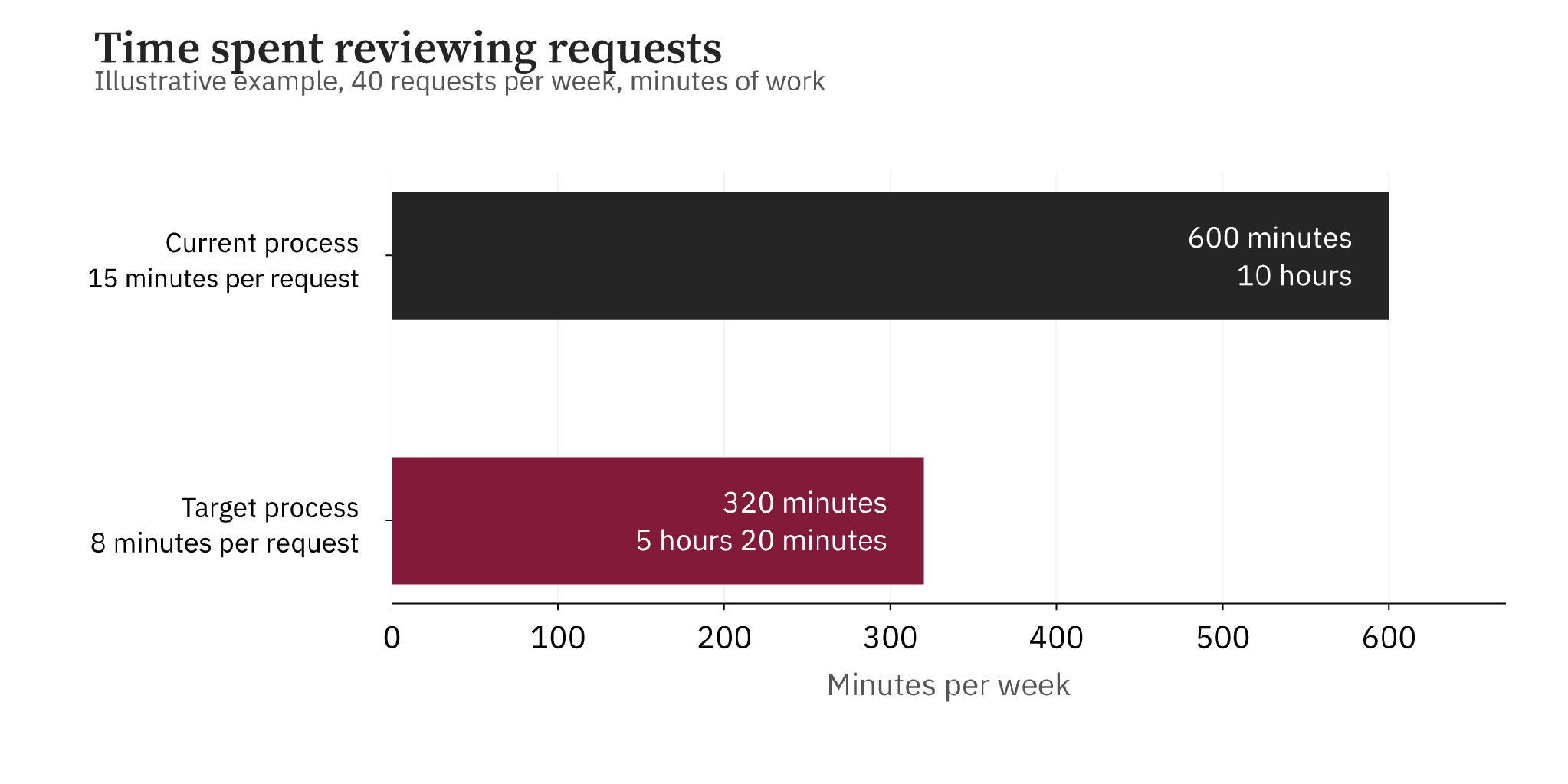
Chart 1. The illustrative target frees up 280 minutes a week at the same volume of 40 requests and with the same checks.
Time released does not translate directly into lower payroll costs. The employee can use it for other tasks. A financial benefit requires a specific, separately verifiable change in costs or results.
The calculation also leaves out waiting time. A review may take 8 minutes while management approval takes several days. Understanding the full process requires assessing work time and waiting time separately.
How to find the causes of delays
The review starts with several actual cases. It establishes when data arrived, where they were incomplete, who was waiting for a decision and why the output was returned. Explanations should be checked against what happened.
A delay can come from missing authority, duplicate data entry or an unclear requirement. Sometimes an employee has too much work at once. Changing the form alone will not resolve a capacity constraint.
Once the cause is known, the next step is to select a small change that can be tested. Examples include mandatory fields, one source of documents or a clear rule for assigning a substitute. The change is tested in a defined area, then deadlines, rework and output quality are assessed.
Ongoing support and process changes
During ongoing support, the team maintains the agreed process. It handles financial tasks, tracks dependencies, organises data handovers and reviews results. Each issue has an owner and a next step.
A major redesign may require a separate consulting project. Examples include changing the purchasing model, involving several departments or introducing a new information system. That work needs its own deliverable, timeline and resources.
This keeps the scope clear. A small change to a form and a redesign of the whole approval system need different levels of preparation. The decision on additional work should take its effect on recurring tasks into account.
For automation, Asar Consulting defines requirements and coordinates implementation within the agreed scope. The software should support a clear process with defined inputs, owners and checks. Responsibilities still need to be assigned when a system is chosen.
Roles of Asar Consulting and the company
The project manager coordinates the work, records open issues and helps agree deadlines. Finance specialists perform calculations and checks within their area of expertise. Client management sets priorities, appoints participants and makes decisions.
Ongoing support covers agreed financial and organisational work. Tasks outside that scope need separate agreement on responsibilities and deliverables. The company’s staff remain responsible for its day-to-day operations.
The client also ensures that information arrives on time. The working procedure sets out which data the company and its partner provide and when. If an input is missing, the team records the cause and the effect on the dependent result. Management can then remove the obstacle and obtain a usable output.
Measures that help assess performance
Measures for a recurring process include deadlines met, returns for rework, waiting time and tasks with missing inputs. Each measure needs a clear definition and source. For example, elapsed time should be measured from the same agreed event in every case being compared.
Speed and quality should be assessed together. Closing requests quickly without checking supporting evidence creates new problems. Both the completeness of the review and whether the result is usable matter.
The team needs time to observe the process after a change. If rework declines, the review should determine whether the improvement came from the new process or a change in the mix of tasks. Comparisons should account for workload and use equivalent conditions.
How to establish a clear working procedure
A short process description is sufficient if one diagram and a few rules give participants what they need. The document should be used in day-to-day work. A new employee should be able to find the data, identify the required result and know whom to ask.
A change to the procedure should have a stated effective date. Continued use of old forms needs a clear reason. If a review finds an exception, the team decides whether to clarify the rule or handle the case separately. This keeps the process clear as people and workloads change.
When a company needs this work
Recurring delays, lost assignments and reliance on reminders from the owner are signs that the process needs attention. An external team can help establish an agreed financial cycle when internal staff lack time or a shared way of working.
If the process is already reliable, the company can maintain it internally. Clarifying one stage may resolve a specific problem. The change should match the cause and scale of the issue.
Process management connects management decisions with team actions. Clear inputs, owners and acceptance criteria make delays easier to find and results easier to check. Alongside accounting, cash planning and budgeting, a clear process helps the business carry out its financial decisions consistently.